

Like Father, Like Son
A deep look into the tragic death of Alexander Hamilton’s son Philip

Introduction
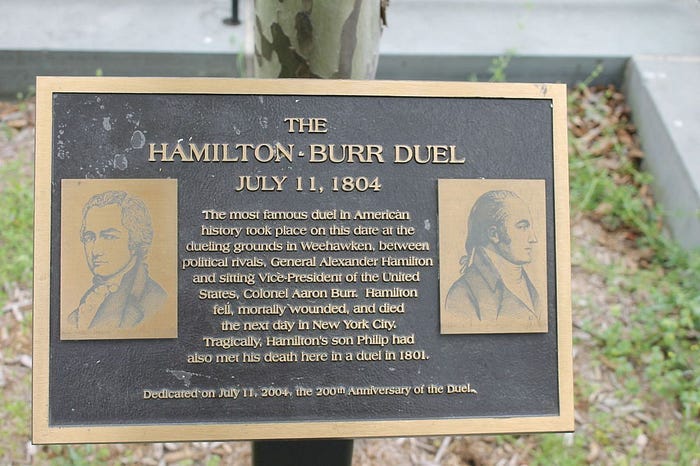
Imagine you found yourself in a situation today in 2025, where your loved one maybe even a child of yours, got themselves caught up in political violence with another person who supported the opposing political party depending on your affiliation and as a result, got killed because disagreements couldn’t be addressed in a civil and non-violent way. It would almost certainly be devastating and something in which it would be hard for you to recover from. That’s what happened with Alexander Hamilton and his wife Eliza when they lost their eldest son, 19-year-old Philip Hamilton in a duel in 1801 at Weehawken, New Jersey, the same location where in a cruel ironic twist, the Founding Father would three years later be killed in his own duel with Aaron Burr. If you’ve seen Philip’s demise the way it was portrayed in the musical, it probably was no doubt to you at the time, a tearjerker.
A Fourth of July Speech and a Heated Confrontation
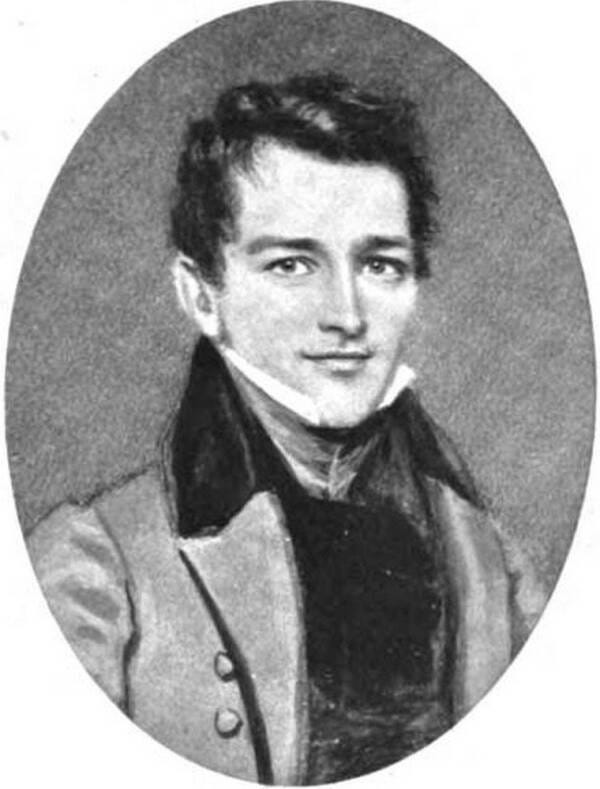
Philip Hamilton in many ways shared similar traits to those of his father. He was brilliant, handsome, witty, and was well-versed in public speaking. But with those positive attributes also came the fatal flaw of arrogance as well as having too much pride, a trait he also seemingly inherited from his father. Born in 1782, and named for his maternal grandfather, Philip first attended boarding school in the 1790s and then subsequently he attended Columbia College (his father’s alma matter) where he graduated in 1800.
Upon graduating, he was on the road to studying law with Alexander going so far as to even create a schedule for him,
“From the first of April to the first of October he is to rise not later than six o’clock; the rest of the year not later than seven. “From the time he is dressed in the morning til nine-o’clock (the time for breakfast excepted) he is to read law.”
As a college student myself, I can appreciate the balance between the time for studying for my major at Texas Tech but also making time by socializing with my friends. And Philip certainly had time to hang out with his friends some of whom went to Columbia with him. Unfortunately, some of that free time would lead to unbearable tragedy. On July 4, 1801, an Independence Day event was held in New York and a 27-year-old Jeffersonian supporter named George Eacker gave a speech. In the speech, Eacker was reported to have said some disparaging remarks about Alexander Hamilton about how he would use his former position as Inspector General of the U.S. Army (the rank was equivalent of Major General), to lead troops and intimidate the Democratic-Republican Party of Thomas Jefferson who had just taken office as the third president four months earlier. Philip did not take these remarks about his father all too well. This was the turning point and would be the beginning of the end.
By chance, Philip and a close friend Richard Price, stopped by Manhattan’s Park Theatre on November 20, 1801. Eacker was watching a production of The West-Indian when Philip and Eacker confronted him. The confrontation soon turned into arguments in the theatre’s hallway where Eacker who was frustrated, called the two “damned rascals.” The term “rascal” in early 19th-century America was a fighting word for a duel. As such, Philip and Richard Price decided to challenge George Eacker to a duel.
The Fatal Duel
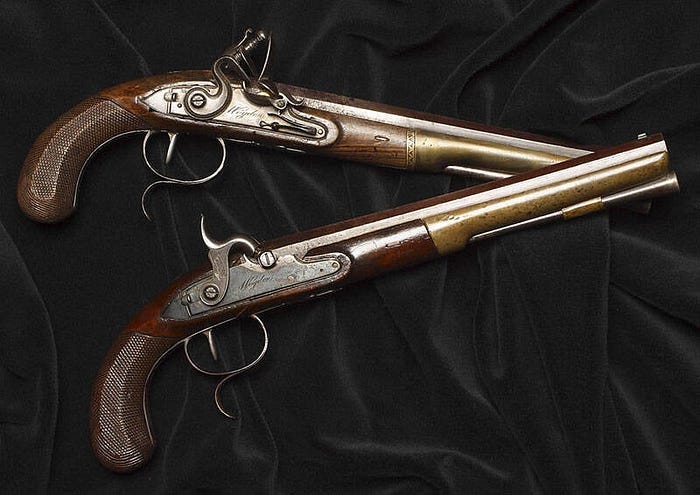
Two days later on November 22, Eacker and Price met across the Hudson River on the secluded dueling grounds in New Jersey. They exchanged four shots before they apologized and went their separate ways, no harm done. Philip went next in his dueling encounter with Eacker a day later on November 23. Per advice from his father who had at this point been involved in 10 affairs of honor, Philip used the method of what the French called deloping. Hence, Philip did not raise his pistol for a few moments but not before Eacker raised his and the 19-year-old Hamilton followed suit. Eacker’s shot delivered what would prove to be a mortal wound above the hip. Hamilton would later write of his son,
“His manner on the ground was calm and composed beyond his expression. The idea of his own danger seemed lost in anticipation of the satisfaction which he might receive for the final triumph of his generous moderation.”
Aftermath
Philip was rushed back across the river to Manhattan. He died on the early morning of November 24, 1801. His death devastated the family, Alexander was barely composed at his funeral a few days later. A friend of Hamilton, Robert Troup would later write that “Never have I seen a man so completely overwhelmed with grief.” Fellow Founding Father Benjamin Rush a physician and signatory of the Declaration of Independence who along with his family knew and befriended Philip when he would visit them in Philadelphia wrote a November 27, letter to Hamilton in which he said that,
“You do not weep alone. Many, many tears have been Shed in our city upon your Account.”
Hamilton wasn’t the only one to be grief stricken over his son’s death. Eliza was reported to have been inconsolable for a long time. Both husband and wife never recovered and were never the same again. But what is perhaps most heart-wrenching is the fact that their 17-year-old daughter Angelica Hamilton (named after Eliza’s older sister Angelica Schuyler Church) was so understandably devastated by Philip’s tragic demise that she suffered a mental break from which she wouldn’t recover and had to eventually be institutionalized. Less than three years later, the family would suffer the most tragic loss of all when on July 11, 1804, Alexander Hamilton engaged in the duel with then sitting Vice President Aaron Burr. Like his son, Hamilton threw away his shot, and like his son, he was shot above the hip and died the next day. Given that these tragic events occurred within a span of three years, it’s not unreasonable to conclude that Philip’s death foreshadowed Alexander Hamilton’s own demise. One must wonder how history would’ve played out if Philip did not let his emotions get the better of him on that July day in 1801.
Sources:
July 11, 1804 Weehawken — Historical Easter Eggs — Today in History
Fraga, Kaleena, “The Tragic Story of Philip Hamilton, The Doomed Son of Founding Father Alexander Hamilton” Sept 14, 2023. Philip Hamilton, Alexander Hamilton’s Son Who Was Killed In A Duel